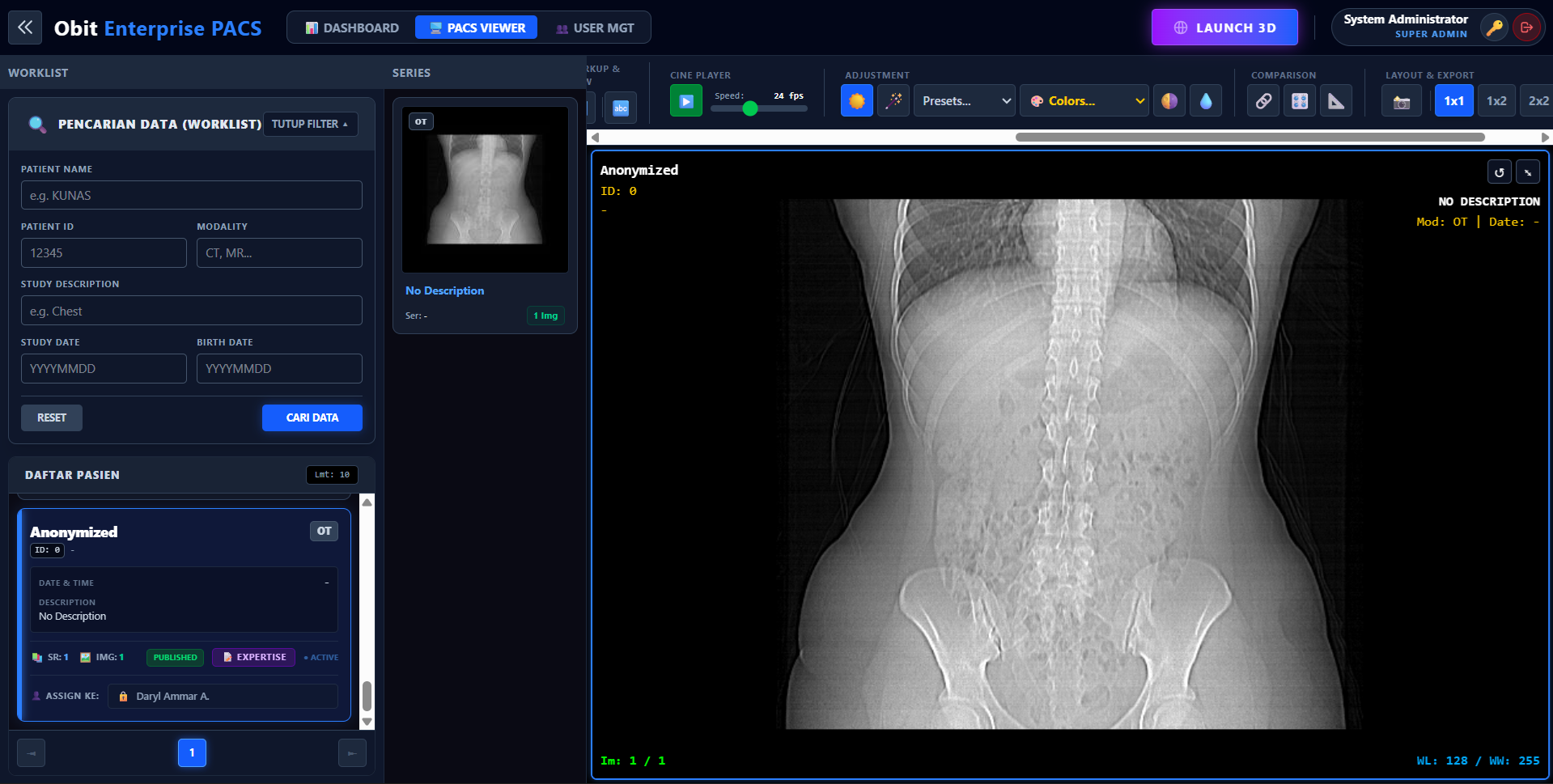

Web-based PACS has become the epicenter of the global teleradiology revolution, fundamentally changing how hospitals and clinics distribute patient data. For decades, radiology departments have been tethered to heavily equipped, rigid reading rooms. Radiologists relied on monolithic, on-premise workstation computers that were massive, expensive, and required constant IT maintenance just to load heavy CT and MRI scans.
However, the rapidly growing demand for remote diagnostics has exposed the critical flaws of these legacy systems. Traditional setups are entirely dependent on local hardware specifications, agonizingly slow when loading DICOM images over standard internet networks, and notoriously difficult to scale as a healthcare facility grows.
Welcome to the new era of Medical Imaging. The future of radiology is no longer confined to a single physical machine; it lives securely in the cloud ecosystem and operates seamlessly directly from your web browser. Here are the absolute reasons why transitioning to this architecture is essential for modern healthcare facilities.
1. Zero-Footprint Access and Device Independence
A "zero-footprint" medical viewer means hospital IT teams no longer need to perform desktop application installations, deal with cumbersome browser plugins, or worry about operating system limitations. Whether a doctor is using a clinical workstation in the ICU, a MacBook at home, or even a tablet while traveling, they can access and diagnose patient data instantly. By offloading the heavy computational processing to the server side and utilizing smart streaming protocols, web-based viewers eliminate the excruciating wait times associated with downloading gigabytes of image files.
2. Browser-Native 3D Advanced Visualization (MPR)
In the past, advanced post-processing features like Multiplanar Reconstruction (MPR), Maximum Intensity Projection (MIP), and 3D volume rendering absolutely required expensive dedicated graphics cards (GPUs) that cost thousands of dollars. Today, cutting-edge web technologies and optimized rendering algorithms allow highly complex 3D reconstructions to be rendered natively inside standard browsers (like Chrome or Safari) at a buttery-smooth 60 frames per second. This empowers doctors to slice through anatomical data, adjust Window/Level parameters, and detect micro-lesions with absolute clarity from any location.
3. Cost Efficiency and IT Infrastructure Scalability
From an operational and IT management perspective, maintaining legacy PACS software across dozens of hospital computers is a logistical nightmare. With Web-Based PACS, updates for new features, bug fixes, or security protocol enhancements can be deployed directly to the central server. The moment nurses or doctors refresh their browser pages, they instantly receive the latest version of the application. This drastically cuts hospital IT maintenance costs and eliminates the need to purchase per-computer software licenses.
4. Seamless Artificial Intelligence (AI) Integration
Another revolutionary advantage of cloud architecture is the absolute ease of integrating Artificial Intelligence. In conventional systems, running AI models to detect lung anomalies or segment organs requires highly specific and expensive local hardware. However, with Web-Based PACS, all AI computations are processed on high-performance central servers. This means hospitals can immediately leverage advanced features like AI Assist to automatically analyze images, perform annotations, and generate preliminary draft reports instantly. The synergy between web access and AI significantly accelerates Turnaround Time (TAT) and reduces radiologist burnout.
5. Uncompromising Security and Patient Privacy Compliance
Transmitting medical records conventionally is highly susceptible to data breaches. Modern web-based architectures solve this brilliantly: DICOM pixel data and sensitive patient metadata remain securely stored on the hospital's server or an encrypted cloud. The system only transmits the rendered visual stream to the user's screen. Because no raw data is permanently downloaded to the doctor's local hardware, the risk of data theft is virtually eliminated, ensuring full compliance with global privacy regulations like HIPAA.
Transform Your Radiology Workflow Today
The transition to a cloud-native workflow is no longer just a luxury option; it is the most impactful infrastructure investment a healthcare institution can make today to thrive in the digital era. If you are looking to empower your clinical team with a lightning-fast, decentralized, and highly secure imaging platform, discover how the cutting-edge solutions at Obit Enterprise PACS are redefining the standards of diagnostic precision.