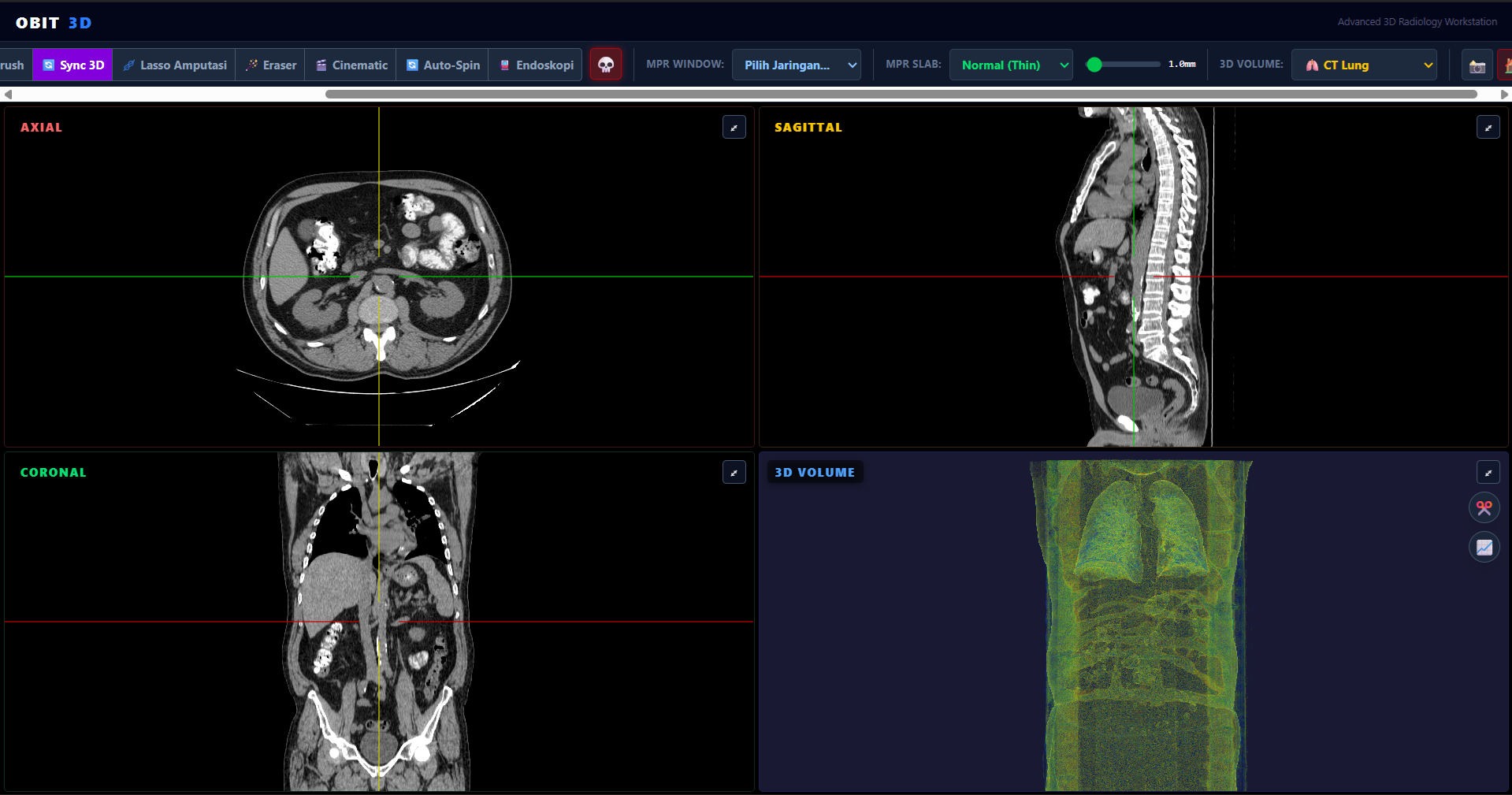

3D multiplanar reconstruction (MPR) has fundamentally revolutionized the way surgeons and radiologists interpret complex anatomical data. When a patient undergoes a standard CT scan or MRI, the imaging modality captures the body in a series of axial slices—imagine looking at a loaf of bread sliced from top to bottom. While these individual 2D images provide critical diagnostic information, they force the human brain to mentally stitch hundreds of slices together to understand the true three-dimensional shape of an organ or a bone fracture.
In high-stakes medical scenarios, relying solely on mental spatial reconstruction is no longer sufficient. The margin for error is simply too small. This is where advanced visualization technology steps in. By utilizing powerful algorithms to interpolate the voxel data from the original axial scans, software can generate entirely new viewing planes instantaneously.
Here are the 5 ultimate secrets of how 3D multiplanar reconstruction is elevating surgical planning and delivering the best clinical outcomes in modern healthcare:
1. Eliminating Spatial Ambiguity
The primary power of MPR lies in its ability to simultaneously display the Axial, Coronal (front-to-back), and Sagittal (side-to-side) planes. By cross-referencing these three perspectives in real-time, a surgeon can pinpoint the exact spatial location of an anomaly. If a lesion appears ambiguous on an axial slice, viewing it simultaneously from the coronal and sagittal perspectives completely eliminates any anatomical guesswork before the first incision is ever made.
2. Enhancing Orthopedic Surgical Precision
In orthopedic trauma, bone fractures are rarely clean or linear. Complex joint fractures, such as those in the pelvis, ankle, or spine, require meticulous pre-operative planning. 3D multiplanar reconstruction allows orthopedic surgeons to rotate the skeletal structure freely, measuring the exact angle of bone displacement and determining the precise size of the screws or plates needed for fixation. This level of millimeter-perfect planning drastically reduces the time a patient spends under anesthesia.
3. Defining Tumor Boundaries in Oncology
For surgical oncologists, understanding the exact relationship between a tumor and surrounding critical structures (like major blood vessels or nerves) is a matter of life and death. MPR enables doctors to map the exact margins of a soft-tissue mass. By adjusting the slice thickness and applying specific rendering filters, surgeons can confidently plan a resection path that maximizes tumor removal while preserving healthy, vital tissue.
4. Advanced Vascular Mapping and Angiography
When combined with Maximum Intensity Projection (MIP), multiplanar techniques become the ultimate tool for evaluating the vascular system. Radiologists can trace the tortuous path of blood vessels, effortlessly identifying aneurysms, blockages, or stenosis. Instead of trying to follow a curved artery across dozens of separate 2D axial images, the physician can generate a single, continuous 3D view of the entire vascular tree.
5. Zero-Footprint 3D Multiplanar Reconstruction in Web-Based PACS
Historically, rendering these complex multiplanar views required the physician to leave their department and use a massive, dedicated radiology workstation. Today, cutting-edge Web-Based PACS solutions have broken this barrier. Through advanced browser-native rendering engines, surgeons can now perform real-time 3D multiplanar reconstruction directly on their laptops or clinical tablets. This decentralized access means life-saving surgical planning can happen collaboratively, from anywhere in the hospital, without any software installation.
Step Into the Future of Diagnostic Viewing
The ability to interact with patient anatomy in true 3D is the defining hallmark of a world-class clinical workflow. At Obit Enterprise, our enterprise-grade viewer seamlessly integrates lightning-fast MPR capabilities, empowering your surgical and radiological teams with absolute diagnostic clarity.
Beyond the immediate clinical benefits for the surgical team, the integration of 3D multiplanar reconstruction offers immense value for patient communication and education. When a surgeon can display a clear, interactive 3D model of a complex fracture or an anatomical anomaly directly on a clinical tablet, it completely demystifies the medical condition for the patient. This unprecedented visual transparency significantly improves the patient's understanding of the proposed procedure, drastically reduces pre-operative anxiety, and streamlines the informed consent process. Adopting this cutting-edge visualization technology is not just a standard software upgrade; it is a fundamental step toward delivering world-class, patient-centric healthcare.